


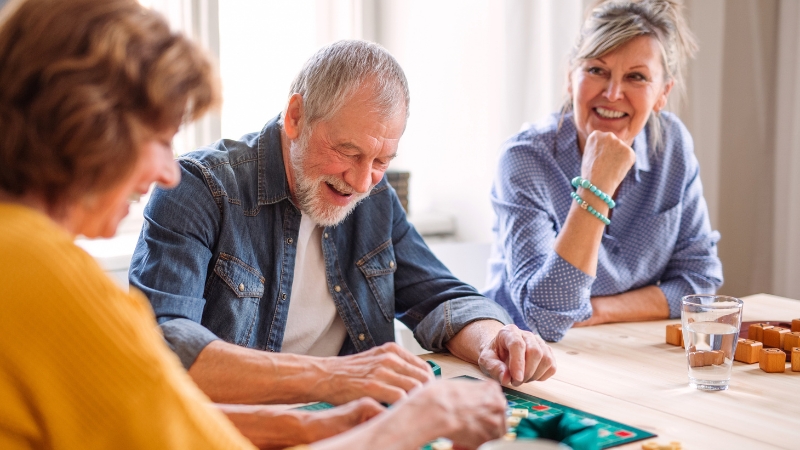

A trivia game can look like light entertainment. A question gets asked, somebody smiles, another person guesses, and the room wakes up a little.
For older adults, that moment can do more than fill time. It can activate memory, focus attention, invite conversation, and give people a chance to use knowledge built over decades.
Research on healthy aging supports mentally engaging and socially meaningful activities as part of a brain-healthy routine, which helps explain why trivia works so well for many seniors.
Trivia also has one advantage many “brain health” activities lack: people actually want to do it. A game feels welcoming. It does not ask seniors to perform like students or patients.
It gives them room to remember, laugh, compete a little, and connect with other people in a setting that feels normal and enjoyable.
Why Trivia Fits Healthy Aging So Well
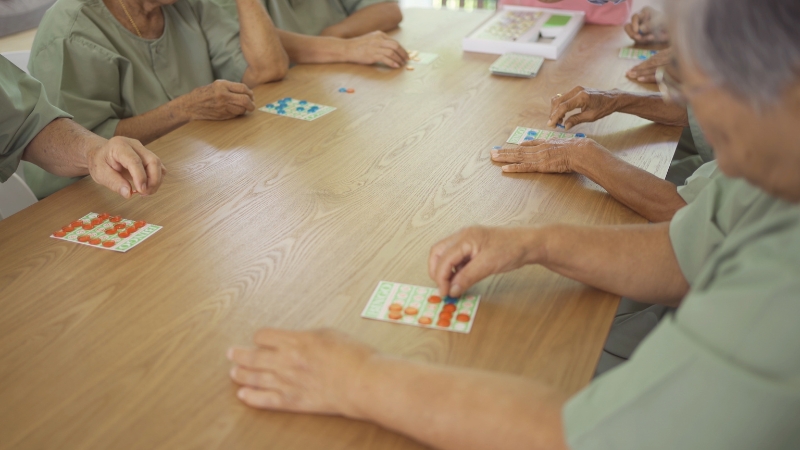
Older adults are often told to stay mentally active and socially engaged. Good advice, but vague. Trivia turns both ideas into something practical.
A player listens to a question, sorts the category, searches memory, filters out wrong answers, and then decides whether to respond. All of that happens in a few seconds.
Older adults are often told to stay mentally active and socially engaged. Good advice, but vague. Trivia turns both ideas into something practical.
Structured educational resources like Qui Si Risolve reflect the same principle from another angle by giving people a clear way to keep their minds working through questions, theory, and problem-solving.
That process uses several cognitive skills at once:
- memory retrieval
- attention
- language processing
- mental flexibility
- judgment
- social interaction
Because so many abilities are involved, trivia can feel richer than a simple worksheet or repetitive puzzle.
One round of classic movies, world capitals, famous songs, or sports history can draw out personal memories and side conversations that make the activity even more valuable.
Memory Practice Is Built Into Every Round
One of the strongest reasons trivia can help seniors has to do with retrieval practice. Memory research has shown that pulling information out of memory can strengthen later recall more effectively than passive review alone.
A 2020 study in Frontiers in Psychology found that retrieval practice improved recollection-based memory in both younger and older adults over a 7-day period, even though the effect was smaller in older adults.
That matters in everyday life. Many older adults say they still know plenty, but finding the answer can take longer. A name sits on the tip of the tongue. A place feels familiar but just out of reach.
Trivia gives regular practice in exactly that zone. The brain has to search, compare, reject, and retrieve. Even when the answer comes a few seconds late, the effort still matters.
A good trivia session also rewards older knowledge, which is important. Seniors often hold deep stores of cultural, historical, geographic, and practical knowledge.
Questions about music from earlier decades, major news events, household brands, famous actors, presidents, or local history can bring that knowledge back into active use.
A person who feels overlooked in daily life can suddenly become the one everyone turns to for an answer. That has emotional value along with cognitive value.
Attention And Mental Flexibility Get A Workout Too
Trivia is not only about memory. Players also have to stay focused on the wording of a question, notice clues, and shift quickly from one category to another.
One minute, the topic might be state flags, the next it could be Broadway songs or famous inventions. That kind of switching taps mental flexibility, a skill that can become more demanding with age.
A 2025 scoping review on digital games for healthy older adults reported especially promising results for executive function, with mixed outcomes in other areas.
Trivia is not identical to every digital game studied in that review, but it shares several features linked to executive function, including attention control, rapid selection, and task switching.
Another reason trivia works well: it is adaptable. A fast-paced round can challenge highly active seniors. A slower version with repeated questions, visual prompts, or team discussion can support older adults who need more time.
That flexibility makes trivia useful in senior centers, assisted living communities, memory care programs, and family settings.
Curiosity Helps The Brain Stay Engaged
Trivia questions create a natural knowledge gap. A person realizes an answer is close, but not fully there yet. Curiosity rises. That mental state matters.
Research on trivia and memory has found that interest plays an important role in what people remember. A 2017 paper on memory for trivia questions highlighted the importance of interest in memory performance, and related work has found that curiosity can support later recall.
For seniors, interest may be one of the biggest keys to making trivia useful. A random set of obscure facts is less effective than questions tied to lived experience.
Categories like old radio shows, travel, gardening, wartime history, classic television, food traditions, famous voices, or sports dynasties often hold attention better because they connect to real memories and personal identity.
Curiosity also improves mood in a subtle way. A person starts wanting to know the answer. That shift from passive sitting to active wandering changes the energy of a room. In later life, especially in institutional settings where boredom can become routine, that shift matters more than many people realize.
Social Connection May Be One Of The Biggest Benefits
Many conversations about senior cognition focus so heavily on the brain that they miss the social side of aging. Loneliness and social isolation are serious public health concerns.
CDC says social isolation and loneliness put people at risk for major mental and physical health problems. CDC also notes strong evidence that social isolation increases the risk of premature death and that loneliness or isolation is linked to higher dementia risk.
WHO has described social isolation and loneliness as an important public health issue for older adults and other age groups.
Trivia helps because it gives people a reason to gather without forcing deep conversation from the start. Some seniors do not want open-ended social activities.
A game offers structure. People can talk through the question, debate answers, tease each other a little, and share memories that surface along the way. Social contact becomes easier because it happens around a task.
Group trivia can also level the playing field. One person may know music. Another may remember history. Someone else may catch word clues faster than anyone in the room.
Team play lets older adults contribute in different ways, which supports dignity and belonging. In later life, feeling useful is often tied closely to emotional well-being.
Mood, Confidence, And Daily Energy Often Improve Too
A useful activity for seniors should do more than occupy time. It should improve the tone of the day. Trivia often does that because it creates anticipation, surprise, laughter, and small victories.
A correct answer lands fast. A funny wrong guess can loosen up the room. A familiar song lyric or old movie question can spark stories people have not told in years.
Confidence matters here. Some older adults hesitate to join activities that make them feel slow, tested, or patronized. Trivia can have the opposite effect when done well.
Familiar subject matter allows seniors to shine in front of peers, family, or staff. A resident who says little at lunch may suddenly answer every question about 1960s television. A grandfather who seems quiet during a visit may light up during baseball trivia with grandchildren.
Research on serious games in dementia has also pointed toward mood-related benefits. A 2022 systematic review and meta-analysis found that serious games improved cognitive function and reduced depression in people with dementia, although authors also noted the need for more long-term research and better standardization.
Trivia is not the same as every serious game used in clinical studies, but the broader pattern supports the idea that engaging in game-based activities can support both cognition and mood.
What The Bigger Research Picture Says
🧠 As new research reveals certain activities can delay the onset of cognitive decline for years
Take our quiz to see how your lifestyle fares 👇https://t.co/qTGGMM2UCT pic.twitter.com/fqTNjBOBXV
— The Telegraph (@Telegraph) February 25, 2026
No reputable researcher would say trivia alone prevents dementia. Evidence is not that simple. What stronger studies do show is that mentally stimulating and socially engaging activities are associated with better cognitive outcomes in later life.
A 2023 JAMA Network Open cohort study found that frequent participation in adult literacy, active mental activities, creative artistic activities, and passive mental activities was associated with lower dementia risk among older adults.
Associations varied by activity type, but the overall direction was encouraging. A 2022 systematic review and meta-analysis also reported that leisure activities were associated with a lower risk of cognitive decline in older adults overall.
Trivia fits naturally inside that bigger picture. It involves intellectual engagement, often includes a social element, and can be repeated over time without requiring expensive equipment or specialized training. For community programs and families, that combination makes it unusually practical.
Why Trivia Often Beats Formal Brain Training For Real-World Use
A lot of brain-training products are polished, expensive, and hard to sustain. Older adults may try them once or twice and quit.
Trivia tends to last because the format is familiar and flexible. It can happen around a kitchen table, in a church hall, during an activities session, or over a video call with family.
A few practical advantages stand out:
- No special equipment is required
- Questions can be tailored to the group
- Team play reduces pressure
- Rounds can be short and low-fatigue
- The activity mixes cognitive effort with social reward
For healthy aging, consistency usually matters more than novelty. An activity people enjoy enough to repeat every week often has more real value than a highly marketed tool that quickly gets abandoned.
Best Ways To Use Trivia With Seniors
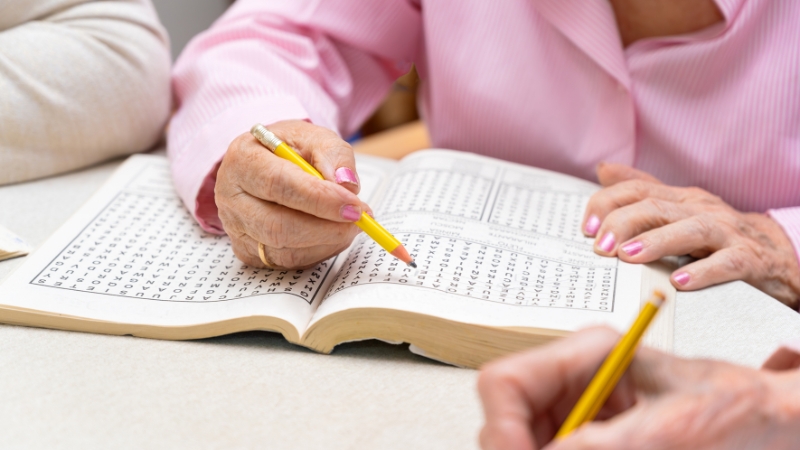
How trivia is run matters. Poorly chosen questions can frustrate people. Good facilitation can make the same activity lively, respectful, and genuinely helpful.
Keep The Challenge Reasonable
Questions should require some thought without becoming humiliatingly hard. A balanced mix of easy, moderate, and harder prompts usually works best.
Use Familiar Categories
Older adults often respond well to categories with emotional or autobiographical ties, such as:
- classic music
- famous films and actors
- sports history
- local landmarks
- food and household life
- major historical events
- old advertising slogans or brands
Interest supports attention and memory, so category choice can make a huge difference.
Allow Enough Time
Many seniors know the answer but need a few extra seconds to retrieve it. Slowing the pace slightly improves participation and confidence.
Encourage Teams
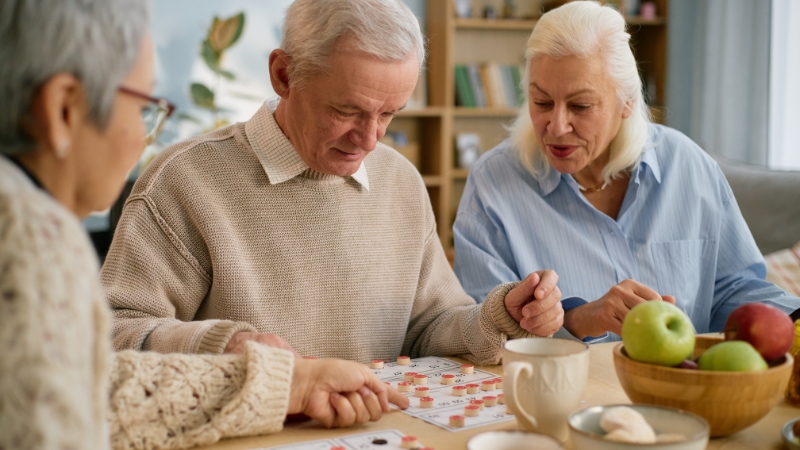
Team play lowers anxiety and increases conversation. It also lets people contribute based on different strengths.
Add Visual Or Audio Cues
Photos, song clips, logos, maps, and old product images can help seniors who respond more strongly to recognition cues than open recall alone.
Keep Sessions Short Enough To Stay Fresh
A good 15-minute round is often better than a drawn-out session that causes fatigue. Energy matters as much as content.
A Simple Comparison With Other Popular Senior Activities
| Activity | Main Skills Used | Social Potential | Ease Of Setup | Typical Strength |
| Trivia games | Recall, attention, language, and mental flexibility | High | High | Strong mix of cognitive and social engagement |
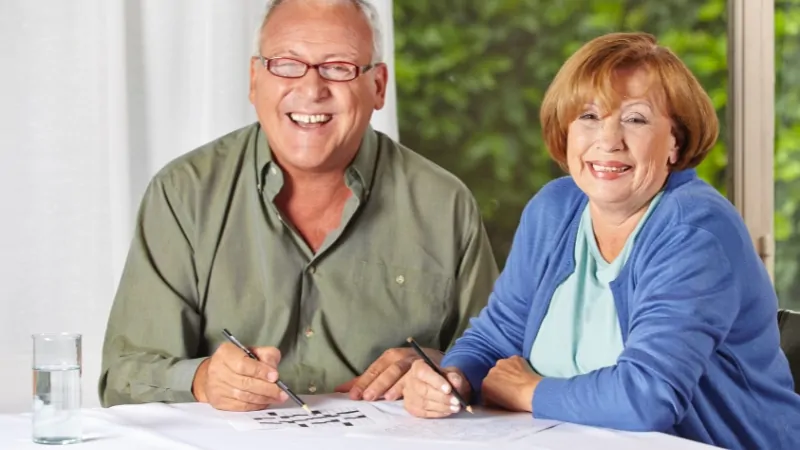
| Crossword puzzles | Word retrieval, vocabulary, problem solving | Low to medium | High | Good for solo mental effort |
| Bingo | Attention, recognition, speed | High | High | Very accessible, lighter memory demand |
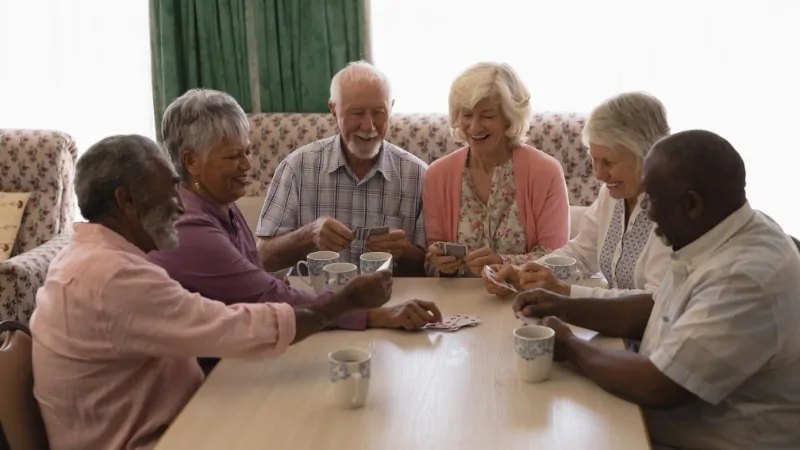
| Card games | Strategy, working memory, focus | High | High | Great for routine group play |
| Sudoku | Logic, concentration, pattern work | Low | High | Useful for solo focus and structure |
Final Thoughts
View this post on Instagram
Trivia games suit seniors because they bring several healthy-aging ingredients together in one easy format: recall, attention, curiosity, confidence, and social connection.
Research supports mentally stimulating and socially engaging activities as part of better aging, and trivia fits that model exceptionally well. It is simple to run, easy to adapt, and enjoyable enough that people come back for another round. That alone gives it real value.